
This is an interesting day because it stitches together some of Armenia’s most important UNESCO listed religious sites plus standout ancient landmarks in one efficient loop. I like the mix of cave and cathedral architecture, and I like that the schedule builds in real guided time rather than only quick stop-and-snap photos. One possible drawback: a few key entrances and lunch are not included, so you’ll want to budget a little extra.
I also like that it’s a private group for up to three people, so you can ask questions and move at a sensible pace. Pickup and drop-off are free within Yerevan, and you get bottled water plus Wi-Fi in the vehicle, which makes a long day feel easier.
Plan for some walking on uneven ground, especially around monastery areas. Since the itinerary includes multiple photo stops and scheduled sightseeing blocks, it is not the kind of trip where you wander for hours on your own.
Key things to know before you go
- UNESCO focused route across Geghard, Echmiadzin, Saint Hripsime, Saint Gayane, and Zvartnots ruins
- Geghard’s cave monastery layout with the sacred spring idea built into the complex
- Garni Temple meets ancient Armenia at a preserved pagan temple site
- Symphony of Stones photo moments paired with an easier, guided-style introduction
- Chrents’ Arch is a quick, classic photo stop with a short walk built in
- Private comfort for up to 3 people with a driver who keeps the timing smooth
A UNESCO heavy day, from Khor Virap to Zvartnots
This tour is built around big Armenia names, the kind you usually see listed as must-sees. You start with Khor Virap, then move through Geghard, Garni, the churches around Echmiadzin, and finish with Zvartnots ruins. It’s a smart way to see a lot without burning your day bouncing between places by yourself.
Because the route is concentrated, the day feels like a story. You’ll go from a monastery tied to pilgrimage traditions, to cave worship at Geghard, to ancient pagan stone at Garni, to church complexes that shaped Armenia’s spiritual life. Even if you only know a little history, the physical settings do a lot of teaching.
The rhythm matters here. There are guided segments and also free time blocks, so you can take photos, stretch your legs, and slow down just enough. You should still expect a packed schedule, since the total time is 9 hours.
More Khor Virap departures:
- From Yerevan: Khor Virap, Garni, and Geghard Day Trip
★ 4.8 · 214 reviews - Khor Virap, Garni, Geghard, Syphony & Charents Arch + Lavash
★ 4.6 · 205 reviews - Garni Temple-Geghard Monastery-Khor Virap Monastery tour
★ 4.7 · 5 reviews
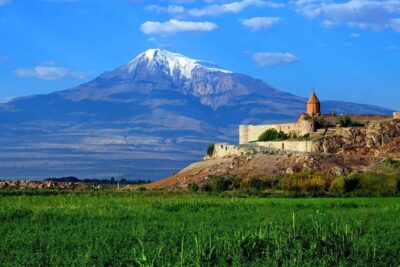
Khor Virap plus Azat Reservoir: the Ararat views moment
You begin with pickup in Yerevan, then head to Khor Virap, where you get about 1 hour on site. There’s a break time plus a photo stop, then time to visit and sightsee. It’s a classic starting point because it sets the tone: pilgrimage, stone, and a deep sense of place.
Khor Virap is an Armenian Apostolic Church monastery tradition tied to the idea of a deep pit. The name is translated as deep hole, and the place is known as one of the church’s pilgrimage shrines. In other words, you’re not only looking at architecture. You’re stepping into a religious landmark that has drawn visitors for centuries.
Next comes a quick shift in mood at Azat Reservoir. You get a photo stop and about 20 minutes of free time. At roughly 1,050 meters above sea level, it is set up for views and light breaks from monastery walking.
Practical tip: bring your camera and comfortable shoes. This is the kind of stop where a lot happens in a short time, and you will likely want a few angles, not just one quick shot.
Geghard Monastery: a cave complex that actually feels built for quiet
Geghard Monastery is one of the highlights of the day, with about 1 hour for guided sightseeing plus free time. The big draw is that Geghard is hollowed out in a cave, so you are inside the rock rather than just near a building. It is also described as a cave monastery, and that changes how you experience the place.
Geghard is connected to a sacred spring that originates in the cave area, which helps explain why the site’s layout makes sense spiritually. The complex is included on the UNESCO World Heritage list, and that status is not just paperwork. The architecture feels medieval and intentional in how it uses the rock.
You’ll also hear the name connection, Geghard meaning spear. The term is linked to a spear attributed to the piercing of Jesus on the cross, and the spear is kept in the museum of Etchmiadzin. That detail adds a specific thread to the visit. You’re not only looking at a cave. You’re seeing how religious objects and stories travel through institutions.
There is also a good balance between structure and breathing room. You get guided time, and then free time to absorb the setting and take photos at your own pace.
Possible consideration: caves can be cooler and dimmer. If you plan to shoot photos, consider keeping your camera settings ready for lower light.
Symphony of Stones: natural sculpture that still takes patience
After Geghard, the day moves to Symphony of Stones, where you get around 1 hour including a guided introduction, photo stop, and free time. This is a natural monument, protected by law, and it is one of Armenia’s must-see spots.
The idea is simple: the rock formations look like they were arranged like instruments, almost like something you would expect a sculptor to make. But you’re not seeing carved stone. You’re seeing naturally formed shapes. That contrast is exactly why it works as a stop.
It pairs well with Geghard because both are about stone, just in different ways. Geghard is human-built in rock. Symphony of Stones is nature shaping itself into something you can read like art.
One practical note: entrance tickets are not included for Symphony of Stones. So plan for that cost before you get there, especially if you’re budgeting tightly.
More Garni temple trips:
- Garni Temple-Symphony of Stones-Geghard Monastery
★ 4.1 · 9 reviews - Garni temple Geghard Monastery Stone Symphony
★ 5.0 · 6 reviews - Garni, Geghard & Symphony of Stones: A Scenic Cultural Tour
★ 5.0 · 5 reviews - Essential Armenia Tour Geghard, Garni, Sevan, Homemade lunch
★ 4.9 · 5 reviews
Garni Temple and the pagan past: stone that survived the centuries
Garni Temple gives you a longer block, about 2 hours total with a photo stop, visit, and free time. This is where the tour shifts from churches and cave monasteries to ancient pagan Armenia.
Garni is the pagan temple built in the second half of the 1st century by King Trdat III. The site is described as the only pagan temple preserved on Armenian territory. That alone makes the stop feel different from typical ruins. You’re not guessing what used to be there. You’re seeing what remains.
After Christianity was adopted, the temple became the summer residence of Khosrovadukht, sister of King Trdat III. That historical turn matters because it shows how religious space can change roles. Same stone, different purpose.
The tour includes a photo moment, but you also have time to wander around and take in the surrounding setting. Entrance tickets are not included here either, so this is another item to plan for in your day budget.
Shoes matter again. You will likely want traction and support, since you may be stepping around outdoor stone areas in a full-day schedule.
Charents’ Arch plus Saint Hripsime and Saint Gayane
This middle part of the itinerary keeps the pace moving while adding variety. First you stop at Charents’ Arch, also known as the Arch of Charents, for a photo stop plus guided time and a short walk of about 30 minutes. The arch was erected in 1957 and dedicated to Armenian poet Yeghishe Charents.
This is not a religious site, so it functions like a mental reset. You get a quick cultural landmark with a different kind of symbolism, then you shift again into church architecture.
Next comes Saint Hripsime Church, with about 1 hour including a photo stop, visit, guided tour, and sightseeing. Saint Hripsime was founded in the 7th century by Catholicos Komitas I Aghtsetsi at the place of the sepulcher of Saint Hripsime. That sepulcher connection is the key reason the church is part of pilgrimage thinking.
Hripsime has been included in UNESCO World Heritage since 2000, and when you stand at sites like this, UNESCO feels less abstract. The architecture is doing its job, guiding worship and focus.
You then visit Saint Gayane Church for about 1 hour with similar structure, photo stop, visit, guided tour, and sightseeing. Saint Gayane was built in the 7th century in honor of St. Gayane on the site of a 4th century chapel. The church is also one of Armenia’s best monuments of Armenian architecture.
There’s a specific detail you can look for during the visit: relics of Saint Gayane are kept in the southern wall of the temple near the altar niche. That kind of directional clue helps you experience the space rather than just glance at it.
Practical tip: these are church stops, so keep your expectations respectful and dress-ready. Comfortable clothing and shoes go a long way, since you’ll likely be standing and looking around for photos.
Echmiadzin Mother Cathedral and Zvartnots ruins: the end that sticks with you
You finish with two major sites tied to Armenia’s church story. The big one first is Echmiadzin Mother Cathedral. You get about 1 hour for a photo stop, visit, guided tour, sightseeing, and a short walk.
The cathedral is described as founded in the IV century BC, with a name meaning place of the descent of the Only Begotten. That meaning is not just poetry. It frames the space around belief and a sense of sacred arrival.
A notable feature is that beyond the main altar in the eastern part, there is another altar in the middle at the site of the descent of Christ. That unusual layout gives you something concrete to notice as you move through the area. You’re not just walking a corridor of walls. You’re seeing a structure built around sacred references.
There’s also a Treasury Museum on the right-hand boundary, where relics and church clothes are kept. The description includes items embroidered with gold and pearls, catholicos’ staffs and crosses, and ritual objects made of gold, silver, and ivory. Even if you do not study every display, knowing what is housed there adds weight to the stop.
Finally, you end with Zvartnots Temple, with about 1 hour for photo stop, visit, guided tour, and sightseeing. Zvartnots means Temple of Vigil Forces, and it was built in the 7th century for 20 years. That time span tells you this was designed as a major statement, not a quick project.
The site was destroyed by a powerful earthquake in the XX century, leaving only ruins. But even the ruins are meant to show rare and majestic beauty. This is often how Armenia’s monumental heritage works: you learn to read scale from fragments.
Entrance tickets are not included for Zvartnots Temple either, so factor that into your plan. After a day of multiple religious sites, this finale gives you a different feeling, open-air and fragment-based, like history in progress rather than history frozen.
Price and logistics: is $146 for up to 3 people good value?
This costs $146 per group up to 3 people for about 9 hours. That pricing structure matters because you are paying for a private vehicle and professional driving time, not per person. If you are traveling with one companion or two, the value becomes clearer fast.
What’s included helps justify the price:
- Comfortable vehicle transportation with professional drivers
- Wi-Fi in the vehicle
- Bottled water
- Free pick-up and drop-off within Yerevan
- Traffic accident insurance and taxes
What’s not included:
- Entrance tickets to Garni Temple, Zvartnots Temple, and Symphony of Stones
- Lunch
So the main “extra cost” risk is entrances and your own food. The good news is that most of the big sightseeing time is built into the schedule through guided tours and time on site. You’re not paying extra every time you step out of the car.
Language is also part of value. The driver can work in English and Russian, which can make the day smoother if you want explanations without guessing. One of the best signs from past bookings is that the guide approach seems attentive and flexible, not rigid.
My practical take: if you have limited time in Armenia and want a tight hit of the country’s most famous UNESCO-related sights, this price fits the job.
How the day actually feels, timing wise
The itinerary flows like this: Khor Virap first, then Azat Reservoir for a short view break, then Geghard and Symphony of Stones, then Garni for a longer stop. After that you move to Charents’ Arch, then Saint Hripsime and Saint Gayane, and finish with Echmiadzin and Zvartnots.
Each of the major church sites gets about an hour on the clock, with guided segments and photo stops. That keeps you from feeling lost. You will have time to look, but you also won’t lose the day to wandering.
Free time blocks are built in at multiple stops, so you can regroup. The total plan still requires stamina, though. This is not a sit-and-watch tour.
For best results, treat it like a walking day with short breaks, not a relaxed cruise.
Who should book this tour, and who might want another option
This is a strong fit if:
- You’re short on time and want a concentrated circuit
- You care about major religious architecture and UNESCO listed sites
- You want a private group experience without the stress of driving and navigation
It might be less ideal if:
- You prefer slow travel and long independent exploring
- You dislike tours where photo stops are frequent
- You want lunch included, or you’d rather have fewer scheduled sites
If you like structured days and meaningful stops, you’ll likely feel satisfied by the end.
Should you book Jan Armenia Tours for Khor Virap, Geghard, Garni, Echmiadzin, and Zvartnots?
If your goal is to see a lot of Armenia’s most famous sites in one organized day, this is a sensible booking. The route is coherent: sacred sites, major church heritage, and ancient stone architecture, ending with the dramatic ruins of Zvartnots.
I’d book it when you value efficiency and guidance. The private setup for up to three people also makes it easier to ask questions and manage your pace.
One last practical thought: bring comfortable shoes and keep some spare budget for entrances and lunch. Once you handle those basics, you can focus on what matters, stone churches, cave monasteries, and the kind of views and ruins that make Armenia feel both ancient and alive.
FAQ
What is the duration and where does the tour start?
The tour lasts 9 hours and includes pickup in Yerevan.
Is this tour private?
Yes, it is a private group for up to 3 people.
What is included in the price?
The price includes transportation in a comfortable vehicle with professional drivers, Wi-Fi in the vehicle, bottled water, free pick-up and drop-off within Yerevan, guide service (optional), traffic accident insurance, and taxes.
Are entrance tickets included?
No. Entrance tickets are not included for Garni Temple, Zvartnots Temple, and Symphony of the Stones.
What languages are available?
The driver is listed as available in English and Russian.
What should I bring, and are there restrictions?
Bring comfortable shoes, a camera, and water. Alcohol and drugs are not allowed, and food and drinks are not allowed in the vehicle.
More Zvartnots Temple Tours in Garni
- Group Tour: Echmiadzin Cathedral & churches, Zvartnots Temple
★ 5.0 · 352 reviews - Yerevan: Khor Virap, Garni, Geghard, Echmiadzin, & Zvartnots
★ 4.9 · 192 reviews - Group Tour: Echmiadzin Mother Cathedral, Hripsime, Zvartnots
★ 4.7 · 159 reviews - Private Half-day Echmiadzin Cathedral, Hripsime & Zvartnots Temple from Yerevan
★ 5.0 · 95 reviews
More Geghard Monastery Trips
- Garni, Geghard, Charents Arch, Azat reservoir, Khor Virap
★ 5.0 · 4 reviews - Trip to Symphony of Stones, Geghard & Lavash Baking in Garni
★ 4.6 · 3 reviews - Private tour to Garni, Geghard, Symphony of Stones
★ 5.0 · 3 reviews - From Yerevan: Garni Temple and Geghard: Private Day Tour
★ 5.0 · 3 reviews
Newest Garni write-ups
- Private Day Trip to Symphony of Stones, Garni & Khor Virap★ 5.0 · 3 reviews
- Trip to Symphony of Stones, Geghard & Lavash Baking in Garni★ 4.6 · 3 reviews
- Garni, Geghard, Charents Arch, Azat reservoir, Khor Virap★ 5.0 · 4 reviews
- Garni temple Geghard Monastery Stone Symphony★ 5.0 · 6 reviews
- Private tour to Garni, Geghard, Symphony of Stones★ 5.0 · 3 reviews
- Garni Temple-Geghard Monastery-Khor Virap Monastery tour★ 4.7 · 5 reviews
- Garni Temple-Symphony of Stones-Geghard Monastery★ 4.1 · 9 reviews
- Garni, Geghard & Symphony of Stones: A Scenic Cultural Tour★ 5.0 · 5 reviews
Khor Virap Tours, compared.
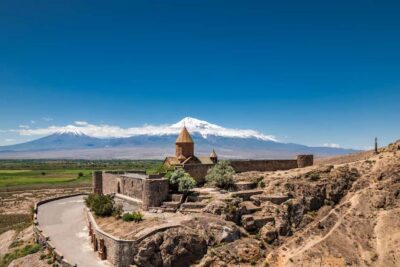
Khor Virap, Noravank and Birds’ Cave Trip with Wine Tasting
Read our review →
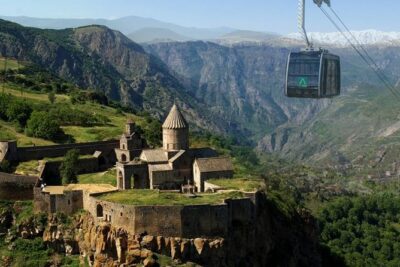
Khor Virap, Noravank, Tatev monasteries (wayback on Ropeway)
Read our review →
Khor Virap, Garni temple, Geghard, Lavash baking
Read our review →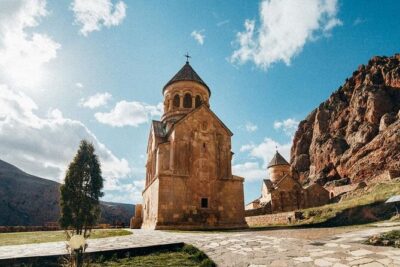
Khor Virap, Noravank & Birds’ Cave Day Trip with Wine Tasting
Read our review →
Private 7-8-hour Khor Virap, Garni temple & Geghard monastery trip from Yerevan
Read our review →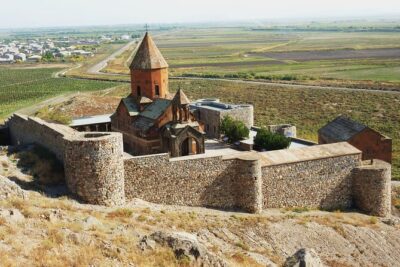
Khor Virap, Garni, Geghard, Syphony & Charents Arch + Lavash
Read our review →Browse the lists this tour appears in