
Reviewed · LAKE SEVAN TOURS
Group Tour: Lake Sevan, Hayravank, Noratus, Jermuk, winery
This tour is interesting because it strings together Armenia’s biggest themes in one long day, high-altitude Lake Sevan, medieval stone art, and spa-town Jermuk, plus a winery tasting at the end.
I like two things in particular. First, it is practical from the start, with bottled water and pastries, air-conditioned transport, and WiFi in the vehicle. Second, I love that the guide keeps the stories concrete, whether you are looking at khachkar cross-stones or hearing how the Selim Pass caravansary was built.
One consideration: the schedule is packed and there’s a 200-step climb near Sevanavank. If you are not into stairs, wear solid shoes and plan for slower pace during photo stops.
Key highlights to look for on this Armenia loop
- Lake Sevan at 1,900 meters for big views and a medieval church complex area tied to 874
- Noratus khachkars where you can spot the special “embroidered” cross-stones from the 13th-14th centuries
- Selim Pass and the 1332 caravansary connected to Chesar Orbelian’s trade-route story
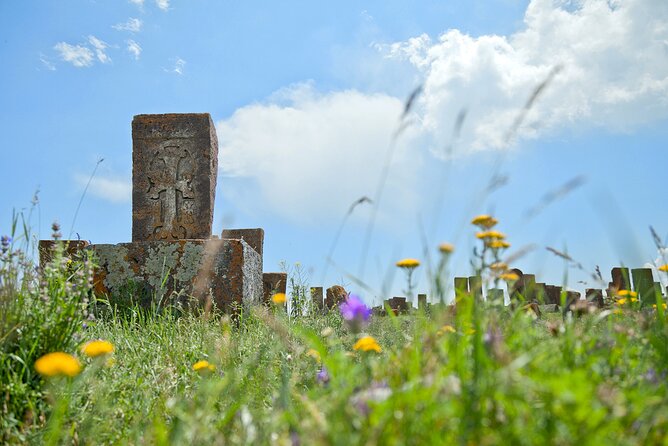
- Jermuk mineral water with a warm drinking gallery where water is around 30 to 50 C
- Hin Areni winery tasting focused on indigenous Armenian grape varietals
- Most admissions included, so you spend less time worrying and more time looking
Price and what you actually get for about $51
This is a full-day, 13 to 14 hour outing priced at $51 per person, and the value comes from the way it’s organized. You are paying for a guide, transportation, and admission tickets, plus the winery tasting. In other words, you are not just buying a ride.
The included extras are the small comforts that matter on a long day: air-conditioned vehicles, bottled water and pastries, and WiFi in the van. That helps when you’re bouncing between viewpoints and monasteries for most of the day. You also get vehicle and passenger insurance, and the tour uses a mobile ticket.
Two things you should mentally budget for are straightforward. Lunch is not included, and the tour does not include hotel pick-up or drop-off. If you’re staying centrally in Yerevan, that’s usually easy to manage, but it is still on you to get to the meeting point.
Group size caps at 49 travelers, which is large enough that you may not have instant personal attention at every stop, but it is still small enough for a lively, guided day with minimal dead time.
More Lake Sevan days:
- Group Tour: Lake Sevan (Sevanavank), Dilijan (Goshavank, Haghartsin)
★ 5.0 · 1,036 reviews - From Yerevan: Lake Sevan & Dilijan Full-Day Group Tour
★ 4.7 · 709 reviews - Group Tour: Tsaghkadzor (Kecharis, Ropeway), Lake Sevan, Trout barbecue treat
★ 5.0 · 511 reviews
Start in Yerevan, then go straight for Lake Sevan
Your day starts at Hyur Service on Nalbandyan poxoc in Yerevan, with a 9:00 am departure. From there, the itinerary quickly hits the emotional high point of the day: Lake Sevan.
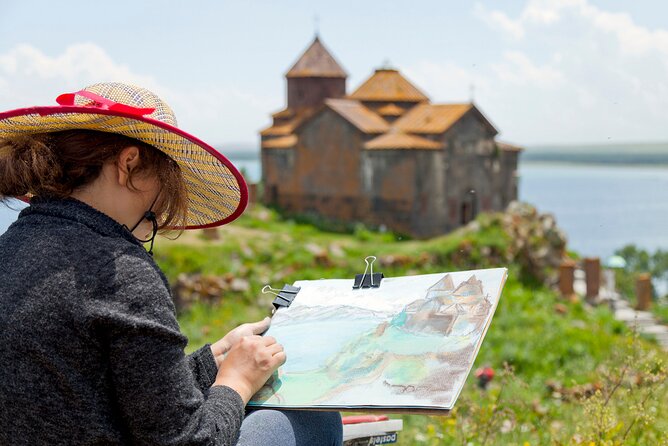
Lake Sevan is often called the blue pearl of Armenia for good reason. It sits about 1,900 meters above sea level and is one of the world’s great high-altitude freshwater lakes. The setting is dramatic because the lake is volcanic in origin, and it is backed by mountains that rise to 3,000 meters and higher. Even when the weather turns a little, the scale is still impressive.
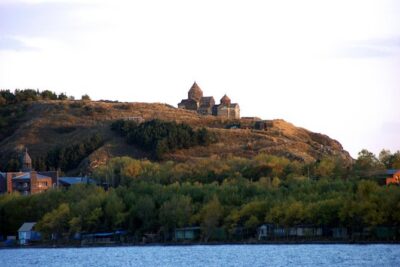
You also get the feeling that this place is more than scenery. Lake Sevan includes a peninsula area tied to a medieval church complex built in 874. That gives your photos a story, not just a view. If you like places where nature and architecture share the spotlight, this is one of those stops.
What to watch for: Lake Sevan time on the ground is short. You’ll want to decide early what matters most to you, the viewpoint moments or the church area. If you plan to include the Sevanavank climb, keep in mind the stair count noted for the route. This is the part of the day where good shoes and a patient pace pay off.
Hayravank Monastery: a modest church on a dramatic rock
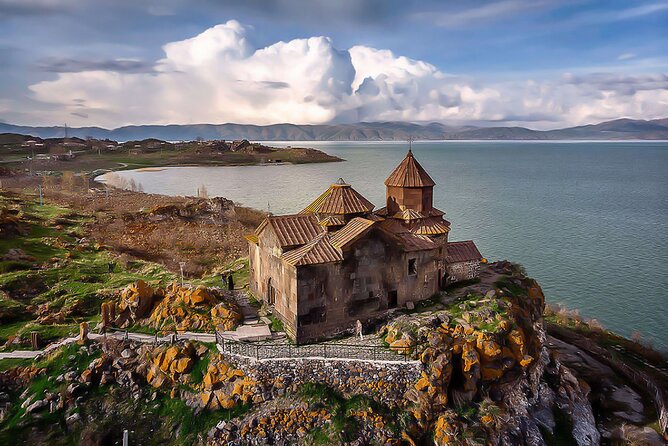
From Lake Sevan, the tour moves to Hayravank Monastery, built on a high rock near the shoreline. The church is often described as modest in feel, and that actually works in its favor. You’re not only looking at something famous and huge, you’re looking at a simple stone structure placed intentionally, where the setting does a lot of the talking.
What I’d prioritize here is the positioning. Because it sits on the shore and rises from it, you can feel the “edge of the lake” vibe even in limited time. The construction is described as roughly hewn stone, which gives it a grounded look rather than a polished, newer feel.
There isn’t a written record of the exact foundation date, but the construction solutions place it among 9th century architectural pillars. In practice, that means the guide can frame what you’re seeing as part of an early medieval tradition, not just an attractive stop.
Drawback to plan for: the day is long, so if you treat every stop like it’s a standalone half-day, you’ll feel rushed. Hayravank is best approached with a clear goal: take a few minutes to absorb the rock placement, then move on.
Noratus Cemetery: the khachkars feel like an open-air museum
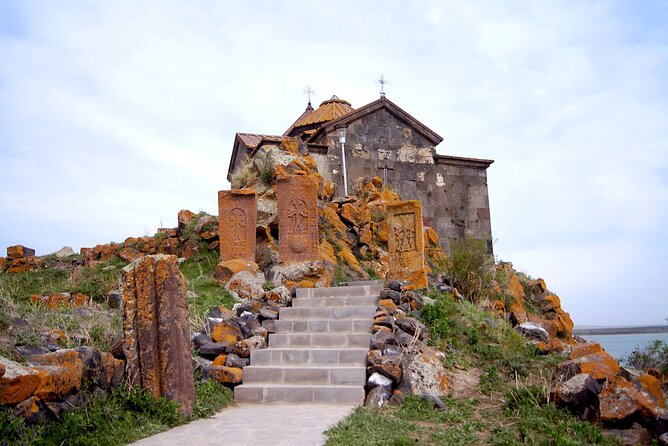
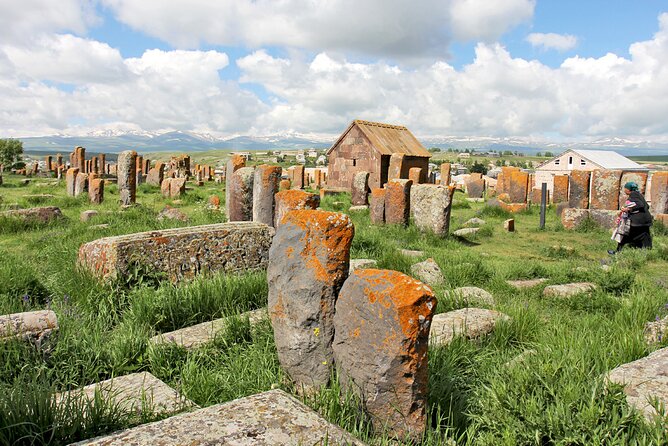
Noratus Cemetery is one of those places where the subject is specific enough that it becomes easy to focus. The main attraction is the art of khachkars, Armenian cross-stones, which is a standout expression of medieval Armenian culture.
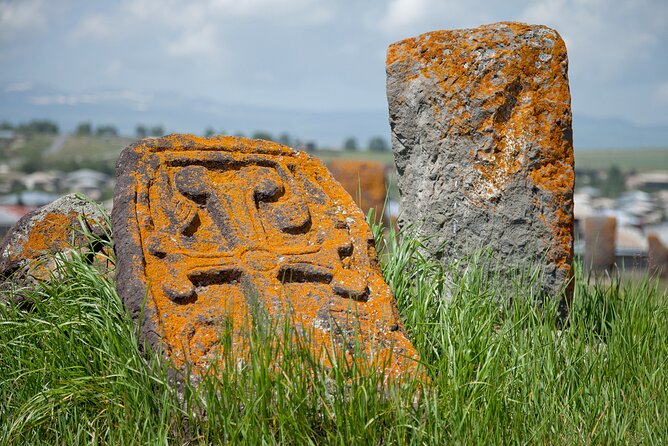
The cemetery is essentially a forest of khachkars, and it helps to know what to look for. The most striking types here are the so-called “embroidered” khachkars, associated with the 13th-14th centuries. They look more detailed and patterned than simpler stones, and once you spot the style, your brain starts sorting the collection naturally.
This is also an important cultural note: Armenian cross-stone art is included in UNESCO’s Representative List of the Intangible Cultural Heritage of Humanity. That matters because it frames the stones as part of a living craft tradition, not only as old objects in a yard.
The time is about 40 minutes, which is enough to walk the main sections and take photos without feeling like you’re sprinting. If you love slower looking, this is where you can actually slow down, because the details reward attention.
Practical tip: bring a light layer if you’re sensitive to wind. Stone cemeteries can feel cooler than you expect, especially near water and open areas.
More Jermuk days:
- Guided tour: Khor Virap, Noravank Monastery, Areni, Jermuk
★ 5.0 · 259 reviews - Private tour to Khor Virap, Hin Areni wine factory (tasting), Noravank, Jermuk
★ 5.0 · 39 reviews - From Yerevan: Khor Virap, Noravank, Jermuk, and Areni Tour
★ 3.5 · 15 reviews - Private Tour: Khor Virap, Areni, Noravank, Jermuk
★ 5.0 · 10 reviews
Selim Pass on the way to Vayots Dzor and back through time
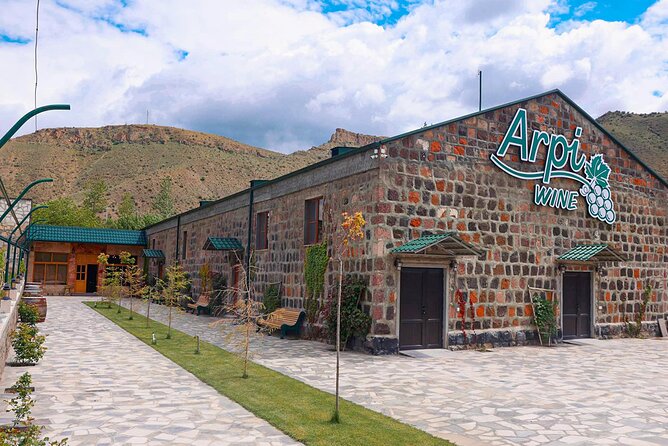
Next comes the drive through Selim Pass, also known as Vardenyats Pass. This isn’t just a scenic road stop. It sits on an important trade route that has been used for centuries, and the tour ties that history to a key element: a caravansary built in 1332.
The story you’ll hear centers on Chesar Orbelian, described as ordering construction in 1332 so long caravans could stop safely. The caravansary is described as a three-nave building, lit only through windows on the ceiling. Wall windows were avoided for security, and you can still feel the logic of that layout in the way the structure is described.
In a practical sense, this stop is valuable because it breaks up the day. After monasteries and cemeteries, the pass gives you a different kind of picture, a human-built structure tied to travel, work, and long-distance movement. It also helps that it’s a relatively quick, clear stop with enough time to step out, stretch, and capture the views from the road.
What to consider: roads in mountain passes can be colder or windier than central Yerevan. Dress as if it will be a little different than you expect.
Jermuk: mineral water, warm temperatures, and a wellness rhythm
Then you reach Jermuk, a health resort in the north-eastern part of Vayots Dzor. The big idea here is the mineral water and how it’s presented for visitors. The tour highlights that mineral waters have been famous for medicinal properties since early medieval times.
You’ll see the drinking gallery, lined with pump rooms where mineral water is available. The water temperature is described as varying from 30 to 50 C, which is a useful detail for planning. This is not iced water you gulp and forget. It’s served warm, and the experience is more about ritual and curiosity than instant refresh.
If you like wellness towns, you’ll appreciate that this place feels like a stop built around treatment and routine. Even if you don’t have a strong belief in cures, you’ll likely enjoy watching how the facility is set up for people to drink and take their time.
Practical tip: if you’re sensitive to temperature, do not rush the first sip. Warm mineral water can feel surprisingly strong.
Hin Areni winery tasting: indigenous varietals with modern production
The day ends with a visit to Hin Areni Winery in the Areni village area. Vayots Dzor and Areni are often described as the cradle of Armenian winemaking for millennia, and this stop is designed to connect that tradition with what’s happening in modern production.
What I like here is the balance the tour emphasizes: historic traditions of winemaking paired with state-of-the-art modern equipment. The winery’s capacity is described as processing over 250 tonnes of grapes, which helps you understand why this isn’t just a hobby operation.
You should also expect that the tasting is focused on local and indigenous grape varietals, since that is the core message of the winery experience. If you want a souvenir beyond photos, this is one of the best places on the day to decide what you’d actually buy or pack home.
The time at the winery is about 40 minutes, with wine tasting included. Admission to the winery tasting is included, so you’re not scrambling for extra ticket costs at the end of a long day.
What to watch for: you are tired by now, and you’re tasting alcohol after hours of driving. If you plan to be careful with pace, sip slowly and pair your decision with the food you might have had earlier.
How the day really feels: fast stops, safe driving, and guide support
This kind of tour works because it has a rhythm. You’re not meant to linger for hours. Instead, you get short, meaningful windows: Lake Sevan, Hayravank, Noratus Cemetery, Selim Pass, Jermuk, and then the winery.
The guide experience is a major reason this tour is so often recommended. In practice, strong guides make the difference between seeing stones and understanding why those stones matter. Names like Khachatur and Rosa show up in the guide feedback, and the common thread is clear explanations and correct, helpful information that keeps your attention even when the pace is quick.
Transport is also handled well. The tour uses air-conditioned vehicles and the driver is part of the comfort level when you’re on mountain roads. That matters on long days, because you’ll spend a lot of time sitting, and safety plus smooth driving helps you feel okay about the schedule.
One more reality check: lunch is not included. That’s a normal setup, but it means the quality of your meal depends on where you choose to eat that day. If food near Lake Sevan is on your mind, I’d keep your plan flexible and pick something that looks fresh and straightforward. Fish-based choices have worked well for at least one person on this kind of stop, so it’s a sensible direction if it’s available.
Packing and timing tips so the day works for you
Since the tour runs in all weather conditions, dress for the weather you’ll meet at higher elevations. That usually means layers. In summer, bring sunscreen and a hat because the sun on open lake areas can be strong.
For footwear, don’t treat this as a casual walk day. You might face steps near Sevanavank, and there are multiple outdoor areas where you’ll want stable footing.
If you’re prone to motion sickness, mountain drives can do it. The vehicle is air-conditioned, which helps, but you may still want to plan for comfort early in the day.
Finally, bring patience for the structure. A day like this moves because it tries to fit a lot of Armenia into one loop. The trade-off is shorter time at each stop, but the upside is you leave with a wider snapshot of culture and nature than a single-site visit.
Should you book this tour?
Book it if you want a solid Armenia sampler in one day: Lake Sevan, khachkars at Noratus, a pass with a medieval caravansary story, Jermuk mineral water, and a winery tasting. For the price, the mix of included admissions, guide-led context, and the final tasting makes it feel like more than a basic bus ride.
Consider skipping or adjusting expectations if you hate stairs or you want leisurely time at one location. The 200-step climb note matters, and the whole day is designed for movement rather than slow exploration. Also, since lunch is on your own, your satisfaction with that part will depend on your choices.
If you can handle a full day and you enjoy variety, this tour is a strong way to see multiple Armenian highlights without having to plan all the logistics yourself.
FAQ
How long is the tour?
It runs about 13 to 14 hours, depending on the day’s timing.
Where does the tour start in Yerevan?
It starts at Hyur Service, 96 Nalbandyan poxoc, Yerevan 0010, Armenia.
Is lunch included?
No. Lunch is not included, and you will pay on your own. The typical price range listed is 3900 to 4900 AMD (about 10 to 13 USD).
What language is the guide?
The guide provides English and Russian consecutively.
Are admission tickets included?
Yes, admission tickets are included for the stops that list free admission. Winery tasting is also included.
Is the winery tasting included?
Yes. The Hin Areni winery tasting is included in the tour price.
Do I get WiFi on the vehicle?
Yes, WiFi is provided in the vehicles.
Does the tour operate in bad weather?
Yes, it operates in all weather conditions. You should dress appropriately.
Is there a lot of walking or stairs?
There is a note about 200 steps to climb Sevanavank. Wear comfortable shoes and be ready for stairs.
How big is the group?
The tour has a maximum of 49 travelers. Seats are not known in advance.
More Wine Tours in Yerevan
- Khor Virap, Noravank and Birds’ Cave Trip with Wine Tasting
★ 4.8 · 845 reviews - Group tour: Khor Virap, Noravank, Areni Winery and Cave
★ 5.0 · 651 reviews - Khor Virap, Noravank & Birds’ Cave Day Trip with Wine Tasting
★ 5.0 · 320 reviews - Tatev & Shaki Waterfall Guided Group Tour with Wine Tasting
★ 5.0 · 266 reviews
Newest Yerevan write-ups
- Private tour: Garni, Geghard, Symphony of Stones and Sevan★ 5.0 · 3 reviews
- Private Tour: Lake Sevan, Sevanavank★ 4.5 · 3 reviews
- Bottle Your Own Local Sparkling Wine in Dilijan★ 5.0 · 3 reviews
- Haghpat & Sanahin UNESCO Sites Tour★ 2.4 · 3 reviews
- Armenian South day: Khor Virap, Areni, Karahunj and Tatev★ 5.0 · 3 reviews
- Private tour to Gyumri, Dzitoghtsyan Museum, Black Fortress★ 5.0 · 3 reviews
- Yerevan Walking Tour★ 5.0 · 3 reviews
- Private Tour to Khor Virap, Echmiadzin, St. Hripsime and St. Gayane, Zvartnots★ 5.0 · 3 reviews
Lake Sevan Tours, compared.
Lake Sevan (Sevanavank), Dilijan (Goshavank, Haghartsin)
Read our review →
Tsaghkadzor (Kecharis, Ropeway), Lake Sevan, Trout barbecue treat
Read our review →
Sevan, Dilijan, Haghartsin, Goshavank, Lake Parz
Read our review →
Garni pagan temple, Geghard monastery, Lake Sevan, Sevanavank
Read our review →
Armenia. Akhpat, Dilijan, Sevan, cascad Yerevan from Tbilisi
Read our review →
Tsaghkadzor, Sevan Lake, and Sevanavank Guided Tour
Read our review →
Private 7-8 hour Trip to Garni – Geghard – Lake Sevan – Sevanavank from Yerevan
Read our review →
Private Lake Sevan, Sevanavank, Dilijan, Haghartsin, Goshavank Tour from Yerevan
Read our review →Browse the lists this tour appears in