
If you want to understand Armenia in one focused morning, this circuit is the fast route. You’ll trace how Christianity took root through major holy sites tied to stories, martyrs, and early church building. I like that it’s a private group (so you can move at a sensible pace) and I like the clear UNESCO payoff, with the day ending at the impressive Zvartnots ruins.
One consideration: the day is only 5 hours, so you’ll need comfortable shoes and a willingness to keep things moving. Also, shorts aren’t allowed, and weather can change quickly, especially if you come in winter.
Key moments you should care about
- Etchmiadzin Cathedral: the “first Christian cathedral” idea, plus legend and meaning behind the name
- St. Hripsime Church: a church built on the grave of a Christian nun
- St. Gayane Church: a 7th-century stop that helps connect the wider story
- Zvartnots Temple: 7th-century medieval Armenian architecture, UNESCO listed
- Private pacing: guided time plus free time at each site, not a rushed assembly line
Why Etchmiadzin is the place that explains Armenia
A visit to Etchmiadzin is basically the shortcut to understanding Armenian Christianity. Armenia’s story is full of invasions, reforms, and survival, but the holy sites here are where the religion becomes personal. You’re not just looking at old buildings. You’re stepping into the places people built because they believed the faith was worth protecting, preserving, and passing on.
This tour is structured in a logical order, starting with the churches connected to early Christian figures and then moving to Etchmiadzin itself. That sequencing matters. It helps you build a mental timeline as you go, so when you reach the cathedral, it feels less like a standalone landmark and more like the center of a living tradition.
I also like that the day is intentionally “guided plus breathing room.” Each stop includes a guided visit and then time to see things your own way. That is a real value in sites where details matter, but your eyes also need a minute to settle.
One more reason this works well: you’re not doing it as a DIY puzzle. Hotel pickup and drop-off are included, and you ride in an air-conditioned vehicle. For a religious and heritage day trip, that comfort is more important than it sounds.
More Zvartnots visits:
- Khor Virap, Echmiadzin & Zvartnots UNESCO Small-Group Tour
★ 4.8 · 67 reviews - Yerevan: Echmiadzin, Hripsime, Gayane, Zvartnots Temple Tour
★ 4.2 · 43 reviews - Yerevan: Echmiadzin, Hripsime, Gayane & Zvartnots Tour
★ 4.0 · 5 reviews
St. Hripsime: the grave site that turns history into a walk-through
The first major stop after pickup is St. Hripsime Church. This is the kind of church where the story behind it pulls you closer than the building alone. The site is connected to the grave of a Christian nun who preached and spread Christianity in Armenia. That detail gives your visit a clear emotional focus: you’re not just touring architecture, you’re visiting a memorial tied to belief.
During your time here, you’ll have a guided tour followed by a short window of free time. Use that free time well. Look slowly at the space, then step back and let the guide’s story click into place with what you’re seeing. In many heritage sites, people rush forward to photos. Here, it’s worth pausing for a few minutes longer than your phone wants to.
Practical note: you get about 40 minutes at this stop including the mix of guided and self-guided time. That means you should decide what you care about most early on: inscriptions, the church setting, or simply the atmosphere and views. You won’t have time to do everything at a whisper pace.
St. Gayane: a 7th-century stop that connects the early story
Next up is St. Gayane Church, another early Christian stop tied to the broader foundation of Armenian holy sites. What stands out from the basics is the date: it’s a 7th-century church. Even if you don’t call out every architectural feature, that century marker helps you understand why these structures feel so serious and deliberate.
Here, the value is in comparison. After St. Hripsime, your brain is already tuned to the idea of faith anchored in specific people and events. St. Gayane continues that thread and helps you see how the early Christian story becomes a network of sacred spaces rather than a single monument.
You’ll get a guided visit plus time to walk at your own pace, with another 40 minutes on site. Again, keep your expectations realistic. You’re collecting understanding, not completing a textbook. If you want to go deeper later, this day gives you the vocabulary and the “why” you need for the next level.
Etchmiadzin Cathedral: the meaning of the name and why it matters
Then you reach the day’s main anchor: Etchmiadzin Cathedral. This is where the tour earns its reputation as the must-see for first-time Armenia visitors.
First, the name. “Etchmiadzin” is associated with the meaning place where the only begotten son of God descended. That connects the site to a legend in which Jesus Christ indicated the spot for a church to be built. Whether you approach it with faith, curiosity, or both, this story frames the cathedral as something more than an impressive building. It is a sacred location tied to a direct sign from heaven.
Second, you’re visiting the residence of the Supreme Catholicos of all Armenians and the center of the Armenian Apostolic Church. That detail matters for how the cathedral feels in real life. You’re not only in a museum-like moment. You’re in the heart of an active religious tradition.
Third, Etchmiadzin is presented here as the world’s first Christian Cathedral. You should treat that as a claim tied to Armenian tradition and prominence, but the overall point is still solid: this is a central, foundational Christian site in the Armenian world.
You’ll have about 1.5 hours at the cathedral area, including guided time and free time. That longer block is there for a reason. Take advantage of it by doing two things: let the guide set the story, then switch to slow looking. Notice how the space organizes movement and attention. Step away from the busiest angles and give yourself room to absorb what makes the cathedral feel like a focal point for centuries.
If the weather is good, use your extra minutes for viewpoints around the cathedral grounds. If it’s rainy or cold, don’t feel guilty about ducking into sheltered areas. The goal is understanding and atmosphere, not suffering for photos.
More Echmiadzin visits:
- Private: Echmiadzin, Zvartnots, Khor Virap
★ 4.4 · 3 reviews - Group Tour: Echmiadzin Cathedral & churches, Zvartnots Temple
★ 5.0 · 352 reviews
Zvartnots Temple: when medieval architecture becomes a UNESCO lesson
The last stop is Zvartnots Temple, a 7th-century landmark of medieval Armenian architecture. From a distance, the ruins and remains already feel dramatic, but the key is how the day builds toward them. By the time you arrive, you’ve already heard the early Christian stories at St. Hripsime and St. Gayane, and you’ve seen Etchmiadzin as a central institution.
That makes Zvartnots feel like the next chapter. It shows how devotion turned into large-scale building projects, and how Armenian church culture developed architectural ambition over time.
Zvartnots is also listed on UNESCO World Heritage sites, so the stop carries both spiritual meaning and heritage value. Your visit includes a guided tour and then about 1 hour to explore on your own. Use that hour to walk the perimeter and understand how the structure might have looked when it was complete. Even when you are looking at ruins, your brain can reconstruct the volume, shape, and grandeur if you give it time.
One practical thing: Zvartnots entry tickets are not included. That doesn’t mean it’s hard, just that you should budget for it. If you hate last-minute surprises, plan to buy it on arrival or shortly after your guide hands you directions.
Timing and pacing for a 5-hour heritage circuit
This is a half-day style experience, designed to fit into a first trip schedule without stealing your whole day. The total duration is 5 hours, and the stop lengths are balanced: longer time at Etchmiadzin, shorter blocks at St. Hripsime and St. Gayane, and a final hour for Zvartnots.
The pacing is also built around “guided then breathe.” That matters because church visits have a rhythm. You need enough guided context to understand the stories and religious significance, but you also need free moments to take it in, pray if that fits you, or simply stand quietly and read the details.
Also, the order helps. You start with early sacred associations, then you move to the center of the Armenian Apostolic Church, and then you end with the architectural landmark that reflects later medieval development. That arc is what makes the day feel coherent.
One small but important reality: you’ll be walking some parts, and you’ll be outdoors depending on conditions. Bring comfortable shoes and think about layers. The sites are open enough that you’ll feel changes in wind and temperature.
Price and value: what $75 for up to 3 people buys you
The price is $75 per group up to 3. That is worth thinking about because the tour is private, not shared with strangers. A private format changes the whole experience: you can keep your pace, you can ask questions, and you aren’t stuck waiting for someone else’s slow photo session.
You also get practical inclusions that add real value on a half-day trip:
- hotel pickup and drop-off
- transport in an air-conditioned vehicle
- bottled water
What’s not included is food and drinks, plus Zvartnots temple entry tickets. So your total day cost will depend on whether you add a meal stop or snacks before and after.
If you’re traveling as a small group, this pricing can be a very efficient way to see these major sites without the hassle of driving and coordinating. If you’re traveling solo, it may still be fair, but the value depends on whether you prefer privacy over the cost difference.
One detail from the experience style: the driver is Armenian, English, or Russian. In at least one case, a driver named Arthur was friendly and polite, which lines up with what you want for a heritage day where you might pause for questions.
Getting the most from guided time at holy sites
A guided tour only pays off if you use the right “listening mode.” Here’s what I suggest you do at each stop, especially at Etchmiadzin:
First, ask yourself what you want to remember at that site. Is it the legend of the name? The idea of Jesus indicating where the church should be built? The identity of the Christian nun at St. Hripsime? If you pick one “anchor” before the guide speaks, the rest lands faster.
Second, save your questions for the free time. During guided time you want continuity. During free time you can slow down and ask for pointing directions or meaning behind a detail you noticed.
Third, use the guided and self-guided split as a strategy. Guided time gives you the story. Self-guided time gives you space to see. This tour’s timing is tight enough that you’ll feel the difference if you treat free time as optional.
What to bring, dress for, and expect from the day
This tour is straightforward, but there are a couple of rules and practical needs:
Bring:
- sun hat
- sunscreen
- comfortable shoes
Dress note:
- shorts are not allowed
That might sound minor, but for religious sites it can be a dealbreaker. If you’re traveling in warmer weather, plan on lightweight long pants or bring a spare layer that meets the rule.
Weather matters too. Even if you’re visiting in good months, keep an eye on conditions. One experience described coping with heavy snow around New Year, and the itinerary still worked because it was organized to fit real conditions. Translation: the tour operator handled the logistics well, but you should still prepare like you might face cold, wet, or wind at outdoor segments.
Who this tour fits best
This tour makes the most sense if you:
- want the core Armenian Christian story in one day
- prefer a private experience with a driver rather than hopping between buses
- like UNESCO sites but don’t want to spend your whole trip on paperwork and ticket hunting
- travel with someone who enjoys religious heritage, architecture, and legends
If you don’t care much about Christianity stories or don’t like guided interpretation, you might find the day heavy. But if you like meaning and context, the structure is built for you. The order of sacred sites gives you a clear sense of why people built them and why they continue to matter.
Also, this is a solid option for first-timers. You get big-name holy sites without needing a car, and the time blocks are long enough to feel like you really saw the place.
Should you book this Etchmiadzin and Zvartnots tour?
I think you should book it if you want a tight, private half-day that covers the headline Armenian Christian sites in a logical order. The value is strongest for small groups since the cost is per group up to 3, and you get the practical basics like pickup, drop-off, air-conditioned transport, and water.
I would hesitate if:
- you want long, slow museum-style wandering at every site
- you’re not comfortable with a rule like no shorts
- you’re trying to pack in too many other activities the same day, since total time is 5 hours
If you’re deciding for a first visit to Armenia, this is one of those days that helps everything else make sense. Etchmiadzin gives you the center, St. Hripsime and St. Gayane give you the early roots, and Zvartnots gives you the architectural “growth chapter.” That combination is exactly what you want from a heritage-focused tour.
FAQ
Where does pickup happen?
Pickup is from your hotel in Yerevan. You should wait in the hotel lobby about 5 minutes before your scheduled pick-up time.
How long is the tour?
The duration is 5 hours.
What is the price?
It costs $75 per group, up to 3 people.
Is this a private tour?
Yes, it is a private group tour.
What sites are included?
You visit Etchmiadzin Cathedral, St. Hripsime Church, St. Gayane Church, and Zvartnots Temple.
Are guided tours included?
Yes. Each main stop includes a guided tour, plus time for sightseeing and self-guided exploration.
What is included in the price?
Hotel pickup and drop-off, transport by air-conditioned vehicle, and bottled water are included.
What is not included?
Food and drinks are not included, and Zvartnots temple entry tickets are not included.
What languages is the driver available in?
The driver is available in Armenian, English, and Russian.
What should I wear or bring?
Bring a sun hat, sunscreen, and comfortable shoes. Shorts are not allowed.
Newest Vagharshapat write-ups
- Private: Echmiadzin, Zvartnots, Khor Virap★ 4.4 · 3 reviews
- Yerevan: Echmiadzin, Hripsime, Gayane & Zvartnots Tour★ 4.0 · 5 reviews
- Private Day Trip to UNESCO World Heritage Sites★ 4.6 · 9 reviews
- Yerevan: Echmiadzin, Hripsime, Gayane, Zvartnots Temple Tour★ 4.2 · 43 reviews
- Khor Virap, Echmiadzin & Zvartnots UNESCO Small-Group Tour★ 4.8 · 67 reviews
Zvartnots Temple Tours, compared.
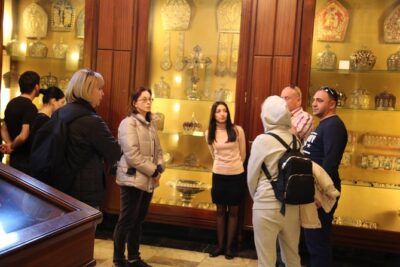
Echmiadzin Cathedral & churches, Zvartnots Temple
Read our review →
Khor Virap, Garni, Geghard, Echmiadzin, & Zvartnots
Read our review →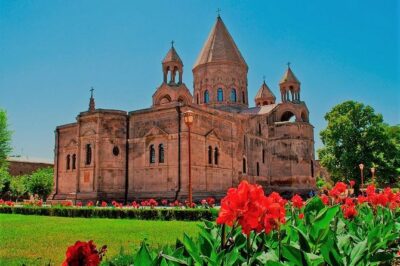
Private Half-day Echmiadzin Cathedral, Hripsime & Zvartnots Temple from Yerevan
Read our review →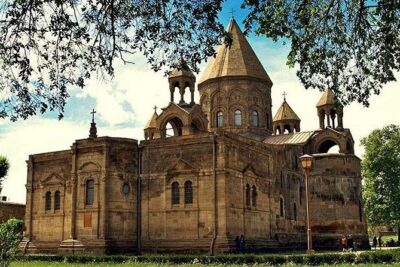
Private tour to Echmiadzin (st Cathedral), Zvartnots, Khor Virap, Garni, Geghard
Read our review →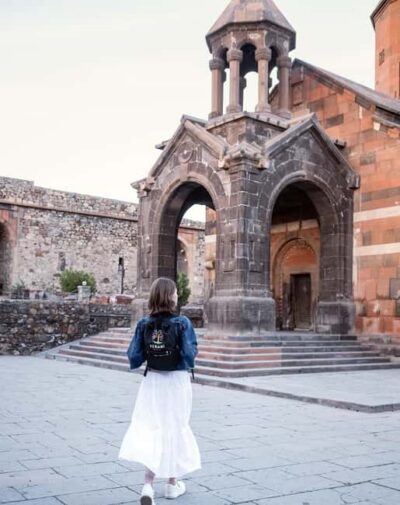
Khor Virap, Echmiadzin & Zvartnots UNESCO Small-Group Tour
Read our review →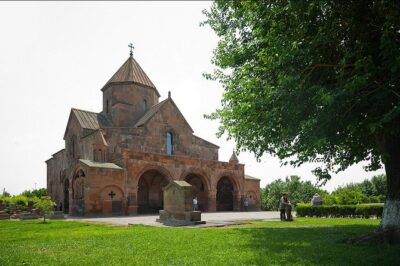
Private 8-9-hour Echmiadzin, Zvartnots, Garni and Geghard trip from Yerevan
Read our review →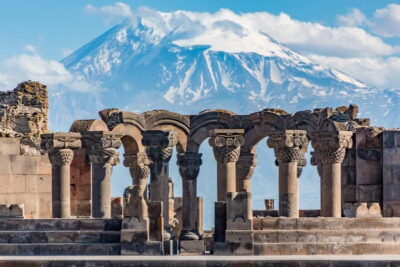
Echmiadzin, Hripsime, Gayane, Zvartnots Temple Tour
Read our review →
Khor Virap, Echmiadzin & Zvartnots UNESCO Small-Group Guided Tour
Read our review →Browse the lists this tour appears in