
Reviewed · TOURS
7 Day Tour through Armenia
Armenia has a knack for mixing big views with serious old stones, and this 7-day route does it in a tight, sensible loop. I like that it pairs Yerevan city highlights with day trips that actually feel different each day. I also like the steady rhythm of churches, monasteries, and fortresses, not just one long drive with stops thrown in.
Two things I especially like: English-speaking organization and a plan that moves you through famous places without making you rush through all the details. The other big plus is that the stops are built around Armenia’s spiritual and historical identity, from cave monasteries to early medieval temples.
One drawback to think about: it is a packed sightseeing style trip. If you prefer slow mornings and lots of free time, you may want to balance this with extra days in Yerevan before or after.
Key highlights before you go
- Pickup offered and a group size capped at 30 travelers, which keeps the vibe manageable
- English touring with a schedule that covers Yerevan, Lake Sevan, UNESCO sites, and fortress views
- UNESCO-heavy days, including Geghard and cave architecture, plus Zvartnots Temple context
- Yerevan mix of culture and art, from the Parajanov Museum to the Erebuni story
- A strong focus on monastery hopping, including Sevanavank, Haghartsin, Goshavank, and Saghmosavank
- Reviews mention smart, helpful guides and a “everything handled” feeling that helps first-timers relax
Price and what $885.13 buys you in real life
At $885.13 per person for about 7 days, you’re paying for more than entry tickets. You’re paying for the logic of the route, the translation layer (English), and the way a good guide keeps each stop from turning into a disconnected photo-op.
This tour also includes a few practical details that matter on the ground. You get mobile tickets, and pickup is offered, which saves time and stress in Yerevan. Group size is capped at 30, so you’re not stuck in a giant swarm that never forms a line.
Also, the daily structure hits famous sites but doesn’t ignore the “in-between” moments. You get museum time, neighborhood walking, and scenic viewpoints like the Ararat valley view from Charents Arch before Garni. That matters because Armenia is not only about landmarks, it is about how the country looks as you travel.
More departures from Yerevan:
- Group Tour: Garni, Symphony of Stones, Geghard, Lavash Baking
★ 5.0 · 1,042 reviews - Group Tour: Lake Sevan (Sevanavank), Dilijan (Goshavank, Haghartsin)
★ 5.0 · 1,036 reviews - Garni & Geghard Small-Group Day Trip with Lavash Baking
★ 4.8 · 881 reviews
The 7-day route: Yerevan as your base, then out to the monasteries
The shape of this trip is simple. Day 1 and Day 7 keep you anchored in Yerevan, and the middle days pull you into monastery country, with big stops like Sevanavank and Geghard plus several Armenian Apostolic Church sites.
This mix is a value play. If you only visited Yerevan, you would miss the country’s main storytelling engine, the monasteries and ancient ruins outside town. If you only chased ruins far from the city, you might feel tired and disconnected from modern Armenian life. This itinerary tries to give you both.
Expect the tour to feel like a guided “highlight reel” with enough context added to make those stones meaningful.
Day 1 in Yerevan: Cascade, Ararat Museum tastings, and a city center walk
Day 1 is a good first day because it builds orientation fast. You start with Cascade Complex, the long stairway in front of the Opera House. It is practical sightseeing, not just exercise, because from the top you get sweeping views over Yerevan. You also get the fun detail of elevators inside the structure, which makes it easier to pace yourself.
Next comes the ARARAT Museum. This stop is described as a guided tasting of different aging cognacs, with the kind of Churchill-style attitude that signals the Armenian brandy culture is not an afterthought here. If you enjoy tasting experiences, this is a smart way to break the day’s heavy history load with something sensory.
Then you finish with a walk along Mesrop Mashtots Avenue. This is the “learn the city shape” part, where architecture and streets give you bearings for the rest of your trip. If you like cities that feel lived-in, this is the kind of walk that helps you spot what you’ll return to later on your own.
Day 2’s spiritual core: Holy Archangels Church and Zvartnots Temple
Day 2 goes straight into Armenian Church history. Holy Archangels Church is presented as a key religious and administrative center for the Armenian Apostolic Church. The story ties it to Gregory the Illuminator and even mentions the site of an earlier pagan temple, with additional layers from the Hripsime monastery built in the early 600s. That “layers over layers” angle is one of the reasons these sites hit harder when you have guidance.
Then you visit Zvartnots Temple, an early medieval church tied to Catholicos Nerses III and construction that stretched across decades. The tour frames it through the involvement of architects linked with the ancient city of Dvin, which is also connected to UNESCO. If you’ve ever looked at ruins and wondered what they were meant to feel like, this is the day that helps your brain build the picture back.
The biggest plus here is pacing. After the city start, you don’t waste time. You shift gears to the origin story and the early medieval “why this mattered” explanation.
Another direction out of Yerevan entirely:
- Khor Virap, Noravank and Birds’ Cave Trip with Wine Tasting
★ 4.8 · 845 reviews - Yerevan: Garni, Geghard, Symphony of Stones & Lavash Baking
★ 4.8 · 758 reviews - From Yerevan: Lake Sevan & Dilijan Full-Day Group Tour
★ 4.7 · 709 reviews - Group tour: Khor Virap, Noravank, Areni Winery and Cave
★ 5.0 · 651 reviews
Day 3: Lake Sevan’s Sevanavank, plus two more medieval monasteries
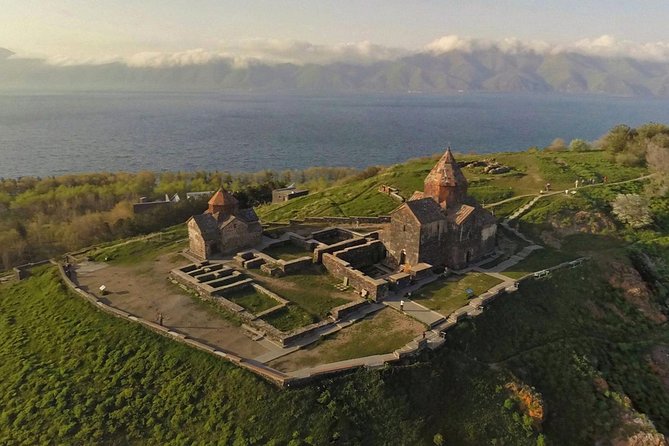
Day 3 is all about scenery with spiritual stops attached. You begin at Monastery Sevanavank, visiting the monastery on Lake Sevan. Sevan gets described as a major high-altitude lake with sweet, blue water, and that helps you understand why monasteries here are not tucked away, they are placed where you can see the sky.
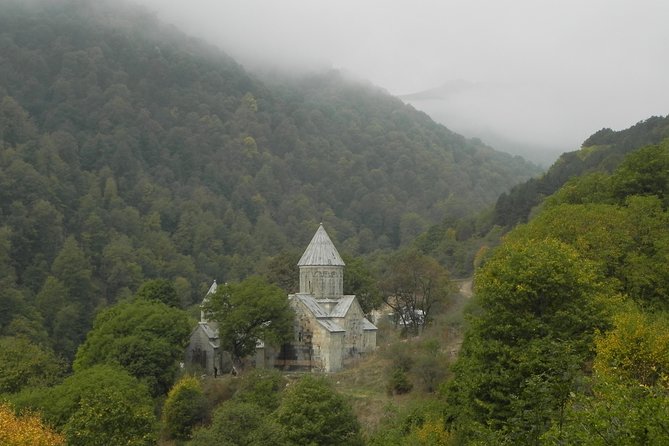
After that, you head to two more monastery stops in the wider Dilijan area region. Haghartsin Monastery is framed as a religious and educational center from the 10th to 13th centuries, with the added perk of being surrounded by nature near Dilijan. Goshavank Monastery is another scholar-centered stop tied to Mkhitar Gosh, known for legal and scientific contributions.
This day works well for two reasons. First, it gives you variety, lake views, then forested medieval buildings, then more scholarship-linked context. Second, it keeps you focused on the “why” behind monasteries as institutions, not just their stonework.
Day 4: Gyumri’s old square and the Ani-school churches
Day 4 starts with Gyumri Main Square and a walk through older streets. The tour description leans into the “history you can feel in the buildings” idea. Old houses survived the 1988 earthquake in parts of the area, and the architectural details are noted: colorful stone combinations and bas-reliefs that show off careful design.
Gyumri is also positioned as a cultural events center, so this day is not only about surviving architecture. It is about a city identity you can sense through how people built and decorated.
From there you move to Marmashen Monastery on the left bank of the Akhurian River. It’s described as consisting of five churches and as one of the best surviving examples of the Ani school of medieval Armenian architecture. Then you continue to Harichavank Monastery, set on a rocky cape on Mount Aragats’ western slope.
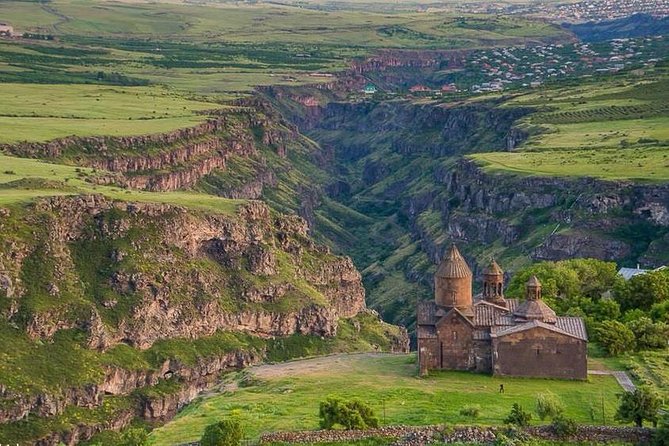
Harichavank is the kind of stop you remember because of how the land itself is part of the story. The complex is tied to a 7th-century founding, with later construction, and the 19th-century use as a summer residence. There’s also a small chapel that is described as split from the cape after an earthquake, now perched above the canyon. That is the kind of visual you cannot plan out from a map, you only get it by showing up.
Day 5: Garni Temple first, then Geghard’s cave-church layers
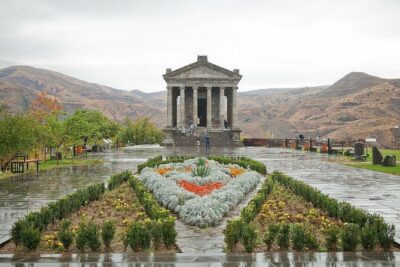
Day 5 balances “sun temple” views with cave monastery architecture. You start with Garni Temple, the only surviving temple in Armenia noted in the tour description, dating to the pagan and Hellenistic era. It is associated with Mithra, the sun god, and the background includes Greek slaves and a build date around 76 BC. It is also framed as a royal summer residence for centuries.
On the way you pause at Charents Arch. This is one of those practical stops for orientation and mood, because the viewpoint looks over the Ararat valley with Mount Ararat in the distance. If you like travel photos, this is where you’ll set up your best “Armenia looks like Armenia” shots.
Then comes Geghard, also spelled as the tour calls it Geghard. This monastery is described as a cave-structured complex and it is tied to UNESCO. You get cave monastery roots, a renaming meaning lance (spear), and a note about biblical lance associations and the move to a museum elsewhere. The main church built in 1215 is identified as the oldest building in the complex, and other churches like Avazan are carved directly into solid rock.
This day is valuable because you see two different time layers of Armenian sacred spaces. You start with pagan-Hellenistic structure and royal use, then shift into centuries of Christian cave architecture. That contrast is the point.
Day 6: Colored churches, Ashtarak Bridge, and Saghmosavank acoustics
Day 6 reads like a mini road trip through gorges and church colors. You start at Tsiranavor Church, which the tour translates as apricot-colored. It is a partly ruined 5th-century Armenian church at the edge of a gorge. Next is Karmravor Church, described as red-colored, a 7th-century Apostolic church.
Then you stop at Spitakavor Church of Ashtarak, white-colored, partly ruined and also at the edge of a gorge, dated to the 13th century. This run of similarly themed churches works because each one is a different century. You start to see how design and survival change over time.
After the church cluster, you cross or visit Ashtarak Bridge, built in 1664 with three unequal arches over the Kasagh River. The key practical detail is that the area under and around it is a great picnic spot, so if you want a breather, this is the moment to take it.
Next is Saint Gevorg Church, connected to the remains of Saint George and described with frescoes painted in the 17th century. Then you visit Saghmosavank Monastery, known for acoustics, and the tour explains the name as tied to spiritual songs sung by Armenian clergy.
You end the day with a trip to Oshakan village and Saint Mesrop Mashtots Cathedral, tied to the burial place of Saint Mesrop Mashtots, creator of the Armenian alphabet. That ending matters because it links sacred space to language and identity.
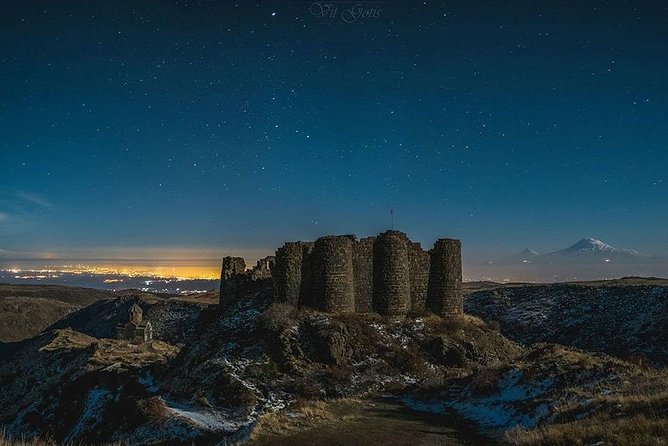
Finally, there is Amberd Fortress, described as a 10th-century fortress above sea level on Mount Aragats slopes. The tour frames it as a place Armenian kings used during wars. If you’ve ever visited a monastery and wondered what people did when they were not praying, this stop adds that missing context.
Day 7: Parajanov Museum, Erebuni history, and Vernissage market time
Day 7 is a clean wrap-up that returns you to Yerevan with art and city foundations.
First you visit the Parajanov Museum, described as the work of Armenian filmmaker Parajanov. The tour notes assemblages, collages, drawings, dolls, and film sketches. This is a good shift from churches and fortresses, because it reminds you Armenia also lives through imagination, not only stone.
Then comes Erebuni Museum, focused on the history of the foundation of Yerevan and its Urartian fortress, Erebouni, on Arin Berd hill. You get the city’s ancient origin story in a museum format, which helps everything you saw on earlier days connect back to place.
Finally, you finish at Vernissage Market, an open-air market for handmade works. It’s listed as free time, so it’s your best chance to slow down and buy small objects without feeling like the tour is chasing you away.
The real win: guides, organization, and a trip that feels handled
The strongest praise across reviews centers on guidance and organization. People repeatedly highlight helpful smart guides, the sense that everything is handled smoothly, and an overall feeling of Armenia as safe and welcoming.
That matters because a tour like this can either feel like a checklist or like a story. With good guidance, you understand why each church, monastery, and fortress exists, and you do not just collect pictures. Based on the feedback, this trip leans toward that better story mode.
The trip is also described as engaging even for kids. That doesn’t mean every child will love every stone wall, but it does suggest the tour pacing and explanations work beyond adult-only travel.
You should still expect a full program. If you want a trip where you barely look at a clock, this probably won’t match. If you want an efficient route that shows you the country’s core without you doing a week of planning, it fits well.
Who should book this Armenia tour
This tour is a strong match if you:
- Want a first-time Armenia route that covers Yerevan plus major historical sites
- Like churches and monasteries with context, not just architecture in isolation
- Prefer a guided English format over figuring things out alone
- Want a small-group feel, capped at 30 travelers
You might think twice if you:
- Hate structured days and want long unplanned breaks
- Need a lot of downtime between stops
- Travel with very specific mobility needs, because several sites involve walking on uneven surfaces (the tour does not list special mobility support details)
If you want to combine this with your own time, I’d plan extra hours in Yerevan around Day 1 and Day 7. That way you can repeat the neighborhoods and markets that click with you, without feeling you missed anything.
Should you book Ari Tour’s 7-day Armenia experience?
I’d recommend booking if you want a guided highlights-and-context trip that mixes big scenic days with UNESCO-level Armenian sites. The value is in the way it organizes your time: pickup offered, mobile tickets, English support, and a route that keeps you moving through Armenia’s identity, from ancient fortresses to the alphabet story.
Don’t book if you want a slow, free-form vacation with long evenings. This is a sightseeing-focused itinerary, and it’s designed for travelers who like a plan.
If you’re okay with that, you’ll likely come away with more than photos. You’ll understand how Armenia layers pagan, Christian, scholarly, and royal stories into the same valleys and the same stones.
FAQ
How long is the Armenia tour?
The tour is listed as 7 days (approximately).
Where does the tour take place?
It’s based in Yerevan, Armenia, with day trips to other sites.
Is the tour offered in English?
Yes, it is offered in English.
Is pickup included?
Pickup is offered.
What size are the groups?
The tour has a maximum of 30 travelers.
Do I get mobile tickets?
Yes, a mobile ticket is provided.
Are tickets and admissions included?
Many admissions are included for specific stops, while a few stops are listed as free (for example Cascade Complex and Vernissage market).
What is the cancellation policy?
Free cancellation is available up to 24 hours in advance for a full refund.
Newest Yerevan write-ups
- Private tour: Garni, Geghard, Symphony of Stones and Sevan★ 5.0 · 3 reviews
- Private Tour: Lake Sevan, Sevanavank★ 4.5 · 3 reviews
- Bottle Your Own Local Sparkling Wine in Dilijan★ 5.0 · 3 reviews
- Armenian South day: Khor Virap, Areni, Karahunj and Tatev★ 5.0 · 3 reviews
- Haghpat & Sanahin UNESCO Sites Tour★ 2.4 · 3 reviews
- Private tour to Gyumri, Dzitoghtsyan Museum, Black Fortress★ 5.0 · 3 reviews
- Yerevan Walking Tour★ 5.0 · 3 reviews
- Private Tour to Khor Virap, Echmiadzin, St. Hripsime and St. Gayane, Zvartnots★ 5.0 · 3 reviews
Tours, compared.
Garni, Symphony of Stones, Geghard, Lavash Baking
Read our review →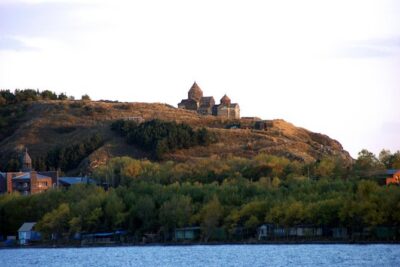
Lake Sevan (Sevanavank), Dilijan (Goshavank, Haghartsin)
Read our review →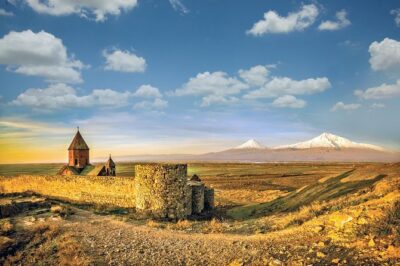
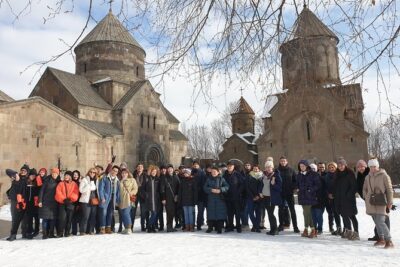
Tsaghkadzor (Kecharis, Ropeway), Lake Sevan, Trout barbecue treat
Read our review →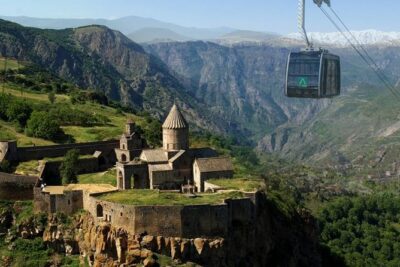
Khor Virap, Noravank, Tatev monasteries (wayback on Ropeway)
Read our review →
Garni pagan temple, Geghard monastery, Lake Sevan, Sevanavank
Read our review →
Amberd, Aragats, Lake Kari, Saghmosavank, Alphabet
Read our review →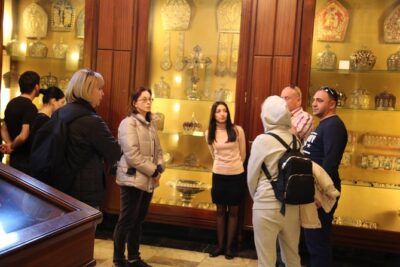
Echmiadzin Cathedral & churches, Zvartnots Temple
Read our review →Browse the lists this tour appears in